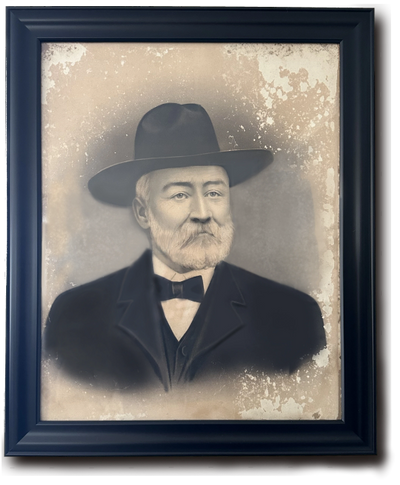
Lord of Welbourn Hall, Virginia Cavalryman & Mosby’s Ranger
When John Peyton Dulany deButts inherited the Manor of Welbourn Hall in 1840, he was only three years old and more than three thousand miles removed from the Lincolnshire estate of his Welby ancestors.
Known throughout his life as “Johnny,” he would grow to adulthood not in England, but amid the rolling countryside around Middleburg, Virginia. Here, among the Dulany family and the lands surrounding Welbourne, the English inheritance of the Welbys became entwined with a distinctly American story.
It was a story that would encompass an old Virginia family, George Washington, the beginnings of Virginia horse country, the American Civil War and, ultimately, Mosby’s Rangers.
↓ ↓ ↓
The Dulanys of Virginia
Johnny descended directly from the Welbys of Lincolnshire and the family of Welbourn Hall through both his father and mother, both sides representing the same prominent Maryland and Virginia family whose American history stretched back well before the Revolution.
Johnny’s late father, Samuel Welby deButts, was the son of Richard Welby deButts and Louisa French Dulany. Johnny's mother, Julia Ann Bladen deButts, née Dulany, was a daughter of John Peyton Dulany and Mary Ann Welby deButts.
The Dulany family had particularly close connections with George Washington.
Johnny’s great-grandparents, Benjamin Tasker Dulany and Elizabeth French Dulany, moved within Washington’s social and family circle. Elizabeth was the daughter of Daniel French of Rose Hill and was Washington’s goddaughter. Following her father’s death while she was still young, Washington maintained a personal interest in her welfare, and Washington even gave Elizabeth away to Benjamin at the couple's wedding. The relationship endured into adulthood and is reflected in surviving correspondence between Washington and members of the Dulany family.
By the early nineteenth century, John Peyton Dulany and his wife, Mary Ann Welby deButts, had established their family near Middleburg.
Their Virginia home bore a name that recalled Mary Ann’s English origins:
Welbourne.
It was within this extended family and the countryside surrounding Welbourne that Johnny spent his formative years.
↓ ↓ ↓

Welbourne and the Birth of Virginia Horse Country
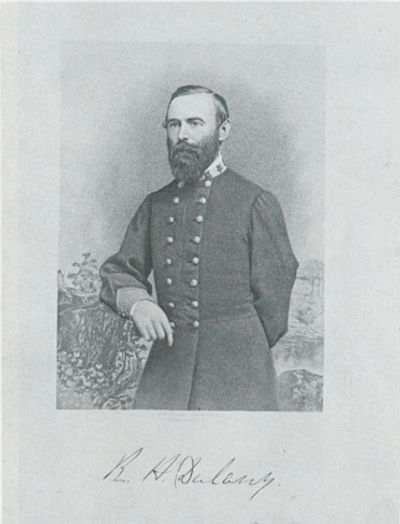
Johnny’s uncle—and his mother Julia’s younger brother—was Colonel Richard Henry Dulany.
Richard became one of the formative figures in the equestrian culture for which Middleburg and Upperville remain renowned.
An avid horseman and prosperous farmer, Richard established the Piedmont Fox Hounds in 1840. Thirteen years later, in 1853, he founded what became the Upperville Colt & Horse Show, originally conceived as a means of encouraging better breeding and care of horses among local farmers and horsemen.
The show endured, becoming one of the defining institutions of Virginia horse country.
For Johnny, however, this was not simply part of his family’s later history. It was the world in which he came of age.
Horses were part of everyday life. The countryside surrounding Middleburg, Upperville and Welbourne was a landscape of farms, hunts, horsemen and extended family connections. Horsemanship was both a social tradition and a practical necessity. The skills Johnny learned there would soon be put to a very different use.
In the spring of 1861, Virginia went to war.
↓ ↓ ↓
From Lord of the Manor to Mosby’s Ranger
On 27 April 1861, John Peyton Dulany deButts enlisted in the 1st Virginia Cavalry.
He served in Company H under his cousin, Captain Richard Welby Carter. Less than three months after enlisting, Johnny experienced his first major battle.
First Manassas
On 21 July 1861, Union and Confederate armies met near Manassas Junction in the first major land battle of the American Civil War.
During the closing stages of the battle, Johnny was among a small body of Virginia cavalrymen who charged Union troops near the Henry House. The charge was costly.
Johnny was wounded when a pistol was shot from his hand, taking part of a finger with it.
He survived and remained in Confederate service. His first battlefield wound would not be his last.
↓ ↓ ↓

Mosby's Rangers
In February 1863, Johnny transferred to the 43rd Battalion Virginia Cavalry, the command that became famous as Mosby’s Rangers. Led by John Singleton Mosby, the Rangers operated throughout Northern Virginia, relying upon speed, surprise and an intimate knowledge of the countryside to strike Union forces and disappear before larger formations could respond.
The territory across which they operated became known as “Mosby’s Confederacy.”
For Johnny deButts, it was also home.
Middleburg, Upperville, Aldie, Leesburg and the surrounding farms and country roads formed the landscape in which he had been raised. The horsemanship that had been part of his upbringing in Virginia horse country now became an essential part of his life as a cavalryman.
And Welbourne itself would become part of his wartime story.
The Feather-Bed Escape
In February 1864, Federal cavalry arrived at Welbourne searching for Mosby’s men.
Johnny was inside the house. With Union soldiers searching the property, he was concealed beneath a feather bed. Three of his younger cousins climbed onto the bed and pretended to be asleep. The soldiers entered and searched the room. They failed to discover the Confederate cavalryman concealed beneath the children and mattress. Johnny escaped capture. His luck would last only a few more months.
Shot and Captured at Leesburg
On 29 April 1864, Johnny and a small detachment of Mosby’s Rangers stopped at Pickett’s Public House near the courthouse in Leesburg. Union cavalrymen of the 2nd Massachusetts Cavalry suddenly appeared. The Rangers rushed for their horses.
Johnny attempted to escape but was shot in the chest and captured.
The wound was serious, but he survived. Following his recovery, he was eventually transported north to Fort Delaware, the Union prison on Pea Patch Island in the Delaware River. There, the Virginia cavalryman who had inherited an English manor as a three-year-old child spent approximately eleven months as a prisoner of war.
↓ ↓ ↓
Home to Virginia
With the Confederacy defeated and the war at an end, Johnny returned to Virginia in 1865.
He had gone to war as a young cavalryman from the Middleburg countryside. He returned after four years of conflict having been wounded, captured and imprisoned.
Life gradually resumed.
Johnny married his second cousin, Nannie Hunter Dulany, and together they raised a family of eight children. They eventually made their home at The Anchorage, adjoining Welbourne and known today as Catesby Farm. The old family landscape remained around him.
Welbourne continued to stand nearby. The horse show founded by his uncle Richard resumed after the war and continued to grow. Middleburg and Upperville developed into the heart of a Virginia equestrian tradition whose beginnings Johnny had witnessed as a young man.
And another inheritance remained part of the family’s history as well.
An English Manor and a Virginia Family
John Peyton Dulany deButts’ life joined two histories that might otherwise appear entirely separate. One began centuries earlier in Lincolnshire, with the medieval manor of Sapperton and the Welby family of Welbourn Hall. The other unfolded in Virginia: with the Dulany family, Welbourne, the emerging horse country around Middleburg and Upperville, and ultimately the battlefields of the American Civil War. Johnny belonged to both.
Through his grandmother Mary Ann Welby deButts, he descended from the family of Welbourn Hall. Through his mother, Julia Ann Bladen deButts, and grandfather, John Peyton Dulany, he belonged to the Virginia branch of a family whose history was intertwined with the development of the Middleburg countryside. And through his own experiences—as cavalryman, Mosby Ranger, wounded soldier and prisoner of war—Johnny became part of Virginia history in his own right.
He died in 1912, more than seventy years after the death of Millicent Welby Ridghill had carried the inheritance of Welbourn Hall across the Atlantic to a three-year-old boy in Virginia. The history of the manor had crossed the ocean with him.
Welbourn Hall was an English inheritance. Welbourne was his American home. In the life of John Peyton Dulany deButts, the histories of the two became one.